
Pinellas County Homeowers Guide
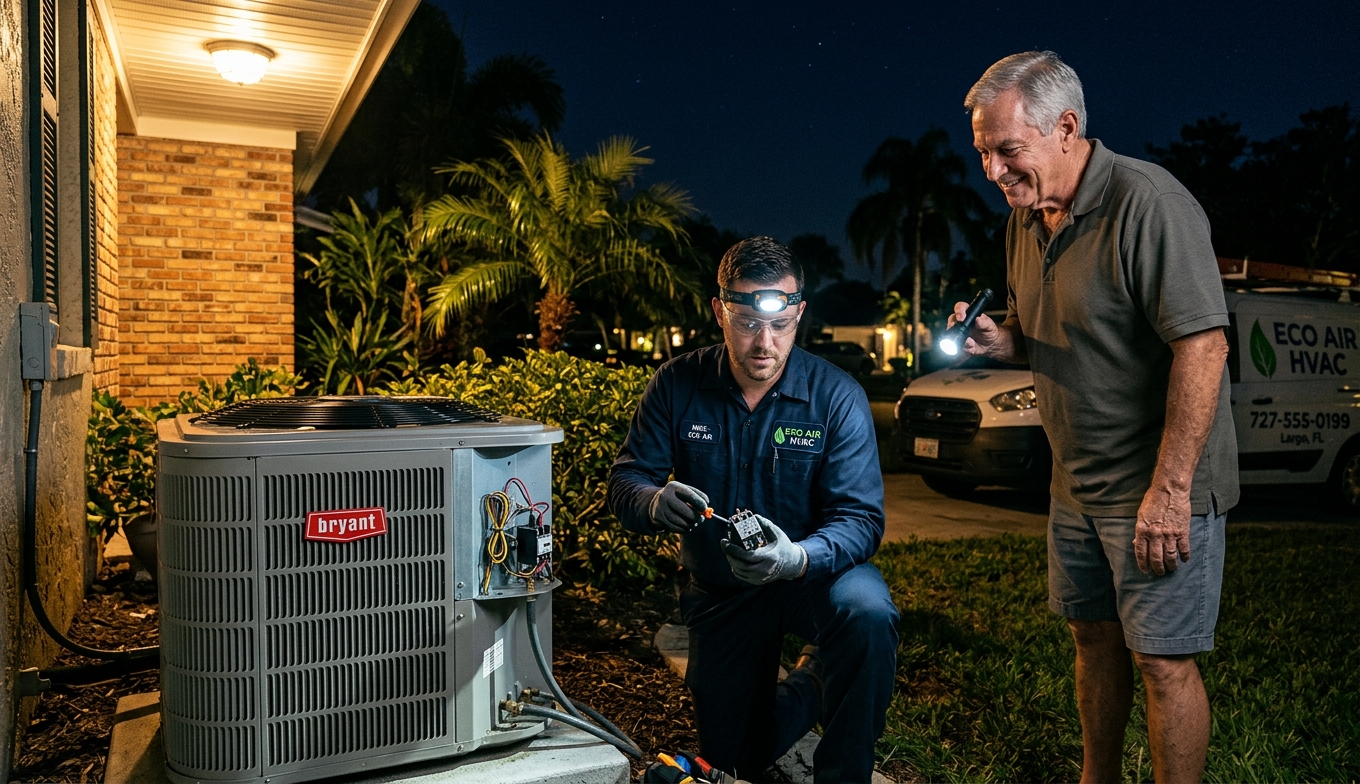
Waking up at 2:00 AM drenched in sweat is a distinct kind of Florida panic. You look at the thermostat, realize the indoor temperature is climbing, and hear nothing but eerie silence from your air handler. If you’re currently scrolling through your phone trying not to lose your mind, you aren't alone. Every summer, hundreds of homeowners across Pinellas County find themselves in this exact situation.
When your cooling system quits under the cover of darkness, you don't just want a HVAC technician, you want immediate answers. At Eco Air Conditioning, we handle midnight AC breakdowns daily. Before you panic-search for emergency services, let's look at exactly why your air conditioner stopped working overnight, how to troubleshoot it right now, and when it’s time to call in the professionals.
The 2 AM Genius Fix and Troubleshooting Checklist
Before assumes the worst (like a dead compressor), there are a few safety switches and common culprits that can cause a system to shut down overnight. Walk through these five steps to see if you can resolve the issue or at least diagnose the problem.
1. Check the Condensate Float Switch is the #1 Culprit in Largo Humidity
Our coastal air near Largo is incredibly humid. Your air conditioner doesn’t just cool your home; it acts as a massive dehumidifier, pulling gallons of water out of the air daily. This water drains out through a PVC condensate line. Over time, algae and mold build up inside that pipe.
When the line clogs, the water backs up into the drain pan. Modern systems feature a safety device called a float switch. When water rises, the switch trips and instantly shuts down the entire system to prevent water from ruining your drywall or ceilings.
When our Eco Air cooling techs respond to late-night calls along East Bay Drive or near Walsingham Park, a tripped float switch is the culprit 90% of the time. If you look at your indoor air handler and see the drain pan filled with water, your float switch did its job. You can sometimes temporarily clear the blockage by attaching a wet/dry shop vac to the termination point of the drain line outside.
2. Inspect the Circuit Breaker
Air conditioners draw a significant amount of electrical current, especially during a brutal Florida summer when they run continuously for 10 to 12 hours straight. If a component is working harder than it should, or if there’s a brief power surge overnight, it will trip the circuit breaker.
The Fix: Locate your home’s main electrical panel. Look for the breaker labeled "AC" or "HVAC." If it’s tripped, it will be sitting in the middle position between ON and OFF. Flip it completely to the OFF position first, then firmly back to ON. Note: If it trips again immediately, do not force it. This indicates a direct electrical short or a failing component, and forcing it can cause serious damage.
3. Look for a Frozen Evaporator Coil
If your AC is still running but blowing warm air, feel the copper lines near your indoor unit. Are they encased in ice? A frozen evaporator coil completely blocks airflow. Coils freeze for two primary reasons: restricted airflow or low refrigerant levels (like an R-410A leak).
The Fix: If you see ice, turn your thermostat from "COOL" to "OFF," and switch the fan setting from "AUTO" to "ON." This forces the blower motor to run without running the compressor, which safely thaws the ice over several hours. Do not try to run the AC again until the ice has completely melted.
4. Examine the Air Filter
It sounds too simple to be true, but a severely clogged air filter starves the system of air. When the air handler can't breathe, the pressure drops, the evaporator coil freezes, and the system shuts down on an internal thermal safety limit. If your filter looks grey, dusty, or caked in pet dander, swap it out immediately.
5. Listen to the Outdoor Condenser Unit (The Faulty Capacitor test)
Walk outside and listen to your outdoor unit. Is it completely silent? Or do you hear a faint buzzing or humming sound, but the fan blade isn't spinning? If it’s humming but dead, you likely have a failed run capacitor.
Capacitors act like large batteries that deliver the electrical jolt your fan motor and compressor need to spin up. The brutal heat inside an outdoor condenser cabinet breaks these components down over time. They frequently give out at night after a grueling day of operating under peak load.
Replacing a capacitor requires a professional who can test the microfarads with a multimeter to match the exact voltage and capacitance specifications of your system.
Is a Nighttime AC Failure Considered a True Emergency in Florida?
Homeowners often wonder if they should wait until normal business hours or call for immediate dispatch. In milder climates, a broken AC is an inconvenience. In Florida, it can quickly escalate.
A breakdown crosses the line into a true HVAC emergency if it involves:
- Health and Safety Risks: If your household includes infants, elderly family members, or individuals with respiratory and medical conditions, climbing indoor temperatures and skyrocketing humidity can become dangerous within hours.
-
Property Damage: A clogged drain line that isn’t caught by a malfunctioning float switch can cause active water damage, flooding your utility closet or dripping through your ceiling.
- Electrical Hazards: If you smell a distinct burning plastic odor or see smoke coming from your vents or air handler, shut down the system at the breaker panel immediately. This is an immediate hazard.
If your home is safe, the weather is mild, and you can comfortably manage with open windows and ceiling fans until morning, it may not require an emergency fee. However, if your indoor climate is rapidly deteriorating, seeking rapid assistance is entirely justified.
Preventing the Midnight Breakdown
The best way to handle a middle-of-the-night emergency is to ensure it never happens in the first place. Regular, professional maintenance ensures that failing capacitors are caught before they die, condensate lines are chemically flushed clear of algae, and refrigerant charges are precisely balanced.
If you’ve gone through your basic troubleshooting steps, checking the thermostat batteries, resetting the breaker once, and ensuring the filter is clean, and your home is still heating up, it's time to bring in professional diagnostics.
For reliable, transparent, and expert help tailored to our unique Pinellas County climate, visit our main Air Conditioning Repair Hub to see how our team handles everything from complex electrical shorts to rapid system restorations.
Quick Answers: Overnight AC Frequently Asked Questions
Why did my AC work fine all day but stop working at night?
During the hottest parts of the afternoon, your AC runs continuously under extreme thermal load. This heat degrades electrical components like capacitors and contactors. Once the sun goes down, the system may cycle off briefly. When it attempts to kick back on later in the night, the worn-out component fails to jumpstart the motor.
Should I leave my AC on if it's only blowing warm air?
No. If your AC is running but failing to cool, turn it off at the thermostat immediately. Leaving a malfunctioning system running can overheat the compressor or burn out the fan motor, turning a simple repair into an expensive component replacement.
How long does it take for a frozen AC coil to thaw?
Depending on the thickness of the ice buildup, it can take anywhere from 2 to 6 hours for an evaporator coil to completely thaw. Setting your thermostat fan to "ON" speeds up this process, but you must ensure your drain line is clear to handle the sudden rush of melting water.
Don’t Spend the Rest of the Night Sweating It Out
Tossing and turning in a humid, 80-degree house isn't going to fix your system, and sleep is too important to waste. If you’ve walked through the troubleshooting steps and your home is still heating up, it's time to bring in the professionals.
Whether you need immediate emergency service to save your sanity or want to schedule a fast diagnostic visit for first thing in the morning, Eco Air Refrigeration is ready to help.
-
Need help right now? Don't wait until business hours. Give us a call at (727) 334-7252 to speak with a live technician or contact us online and we'll get back to your as fast as possible.